

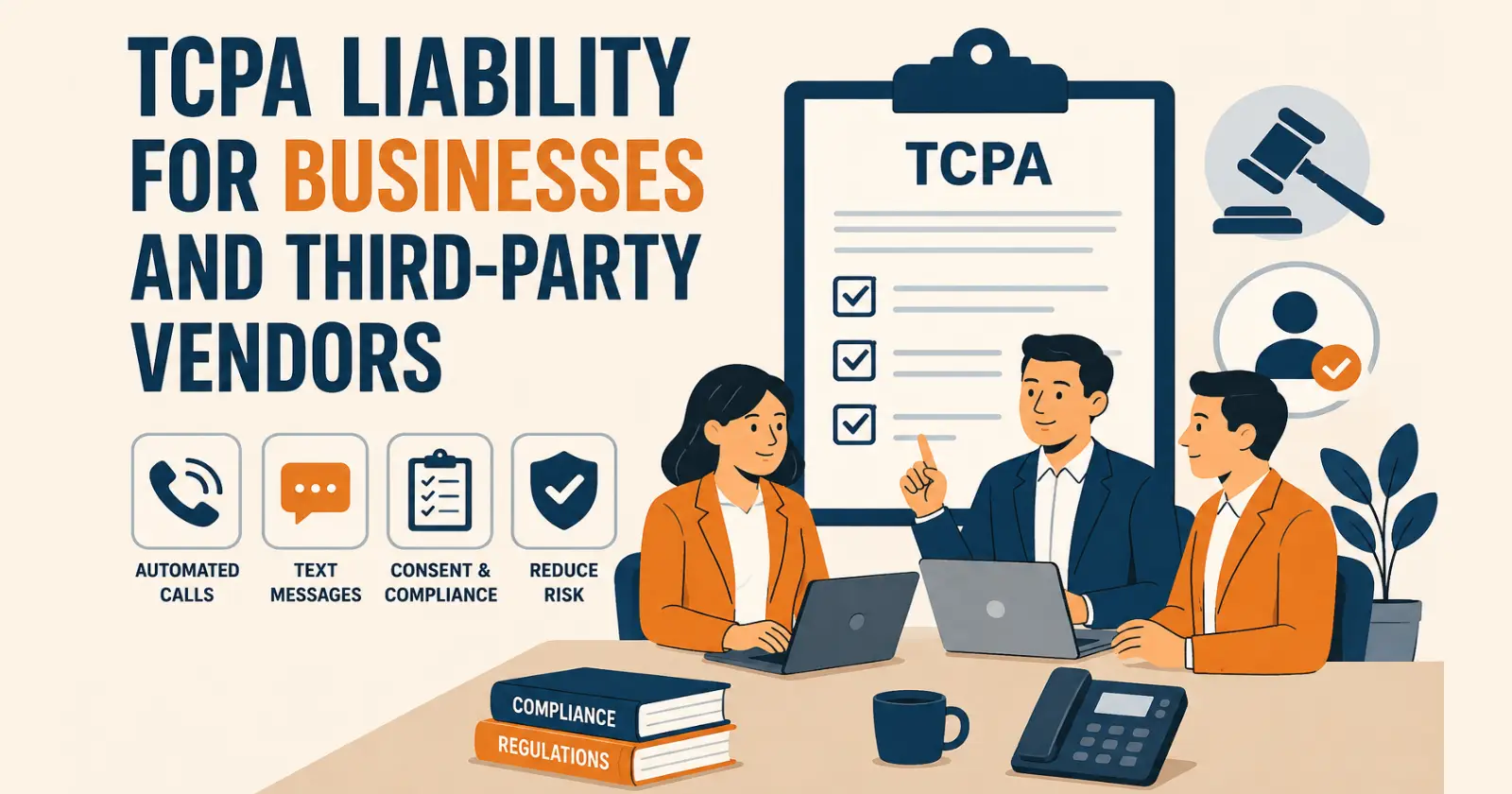
Companies that ignore the Telephone Consumer Protection Act can face penalties that seriously hurt their bottom line. Businesses often rely on outside vendors to handle outreach, assuming that it limits their exposure. That assumption has cost companies millions, and it keeps happening across every industry you can think of. Courts and regulators have been consistent on one point: hiring a vendor does not hand off your legal responsibility. If your company runs outbound marketing, you need to understand exactly how liability flows through that relationship. Getting this wrong is not a small risk you can quietly manage later.
How the TCPA Defines Business Responsibility
The TCPA covers calls, texts, and faxes sent through automated systems, and the rules are specific. Before using auto-dialers or prerecorded messages, your business needs prior express written consent from the consumer. You also have to honor Do Not Call requests and suppress against registered consumer lists without exception. These rules apply whether you are contacting people directly or running campaigns through an outside vendor. A team that understands the compliance exposure can help you build the right processes before something goes wrong.
When Third-Party Actions Become Your Problem
Courts have repeatedly ruled that what your vendor does on your behalf is still your legal problem. The legal concept behind this is vicarious liability, and it can pull your company into a lawsuit fast. How much control a company exercises over vendor operations plays a major role in determinations. A business cannot escape liability simply by outsourcing its outreach to another organization. Bringing in dedicated experts helps your company spot real risks before they turn into regulatory problems. The sooner you understand how this framework works, the better your chances of staying out of trouble.
What Courts Have Said About Vendor Liability
Federal court decisions on TCPA cases involving outside vendors should concern any business using outside callers. Judges examine how much direction the hiring company gave to the vendor during campaigns. They also consider whether the business approved the vendor’s contact lists and calling methods. A company that knew about potential violations and failed to respond faces greater exposure in litigation. Settlements in these cases have reached millions of dollars, making early prevention more worthwhile. If you ever end up in court, a documented compliance program is one of the best things you can show a judge.
Steps to Reduce Your Exposure
Businesses can take specific steps to limit risk before allowing a vendor to begin outreach. Before you sign anything, vet your vendor carefully and know exactly what you are agreeing to. Your contract should spell out TCPA compliance requirements and include clear language around consent documentation. Companies should require vendors to submit regular reports on their calling activity and complaint rates. Periodic audits of vendor behavior can catch problems before they escalate into formal complaints. It is a lot easier to show a court what you did to prevent problems than to explain why you did nothing until you got sued.
Why Oversight Programs Matter Most
Checking in on your vendor once at contract signing is not enough, and courts have made that very clear. Ongoing monitoring is the only reliable way to catch problems before they turn into something you have to defend in court. Companies need consistent visibility into how vendors are reaching consumers on their behalf. Most internal teams are not equipped to evaluate vendor risk under the TCPA, and that gap can be expensive. A dedicated compliance firm brings tools and expertise that take years to build in-house. When you weigh the cost of structured oversight against a class action settlement, the math is not very complicated.
If your business relies on outside vendors for calls or messages, TCPA liability is not something you can afford to ignore. Every campaign that goes out without proper oversight is another opportunity for something to go wrong. Companies that build structured compliance programs give themselves a real defense when regulators come knocking. When regulators come looking, a documented vendor management process shows you were not cutting corners to begin with. Most companies that survive regulatory investigations do one thing differently: they prepare. If you have not yet taken a hard look at your vendor compliance program, now is a good time to start.
