

Introduction
Every successful business has a recognizable brand identity. But if this is not legally secured, then others might end up using or registering your trademark before you. This might cost you a lot in terms of legal issues, financial setbacks, and loss of credibility in the market.
The trademark service is a solution that helps businesses avoid such issues. This service helps a business to conduct a trademark search online, register a trademark, and secure their trademark legally.
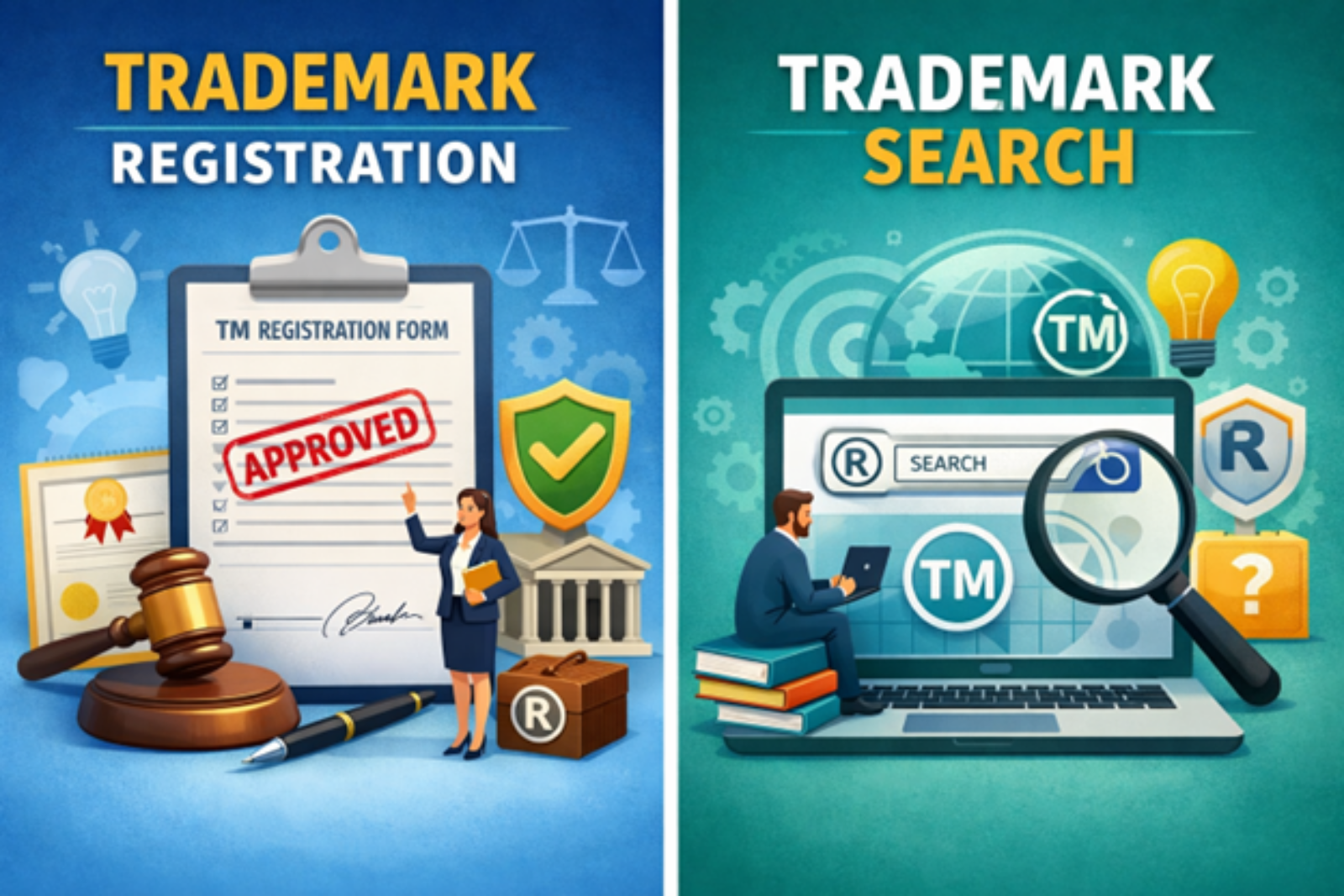
In this blog, we are going to discuss what trademark services entail, why a trademark search online is important, how trademark registration works, common mistakes to avoid, and the importance of trademark registration.
What Are Trademark Services?
Trademark services can be defined as the provision of assistance to businesses for the protection of brand identity. Trademark services include the following:
- Conducting a comprehensive search for the trademark on the internet
- Advising on the availability of the trademark
- Filing the application for the registration of the trademark
- Response to the examination report
- Response to objections and opposition
- Renewal compliance
The owner of a registered trademark enjoys exclusive rights to the mark in respect to certain goods or services. This prevents competitors from using the same or confusingly similar marks that could mislead customers.
Trademark protection applies to:
- Brand names
- Logos
- Taglines
- Symbols
- Product names
- Even unique packaging styles in certain cases
Without proper trademark registration, businesses operate with limited legal protection.
Why Conducting a Trademark Search Online Is Critical
One of the most important steps before applying for registration of a trademark is to perform a search for trademarks online.
The search confirms whether the particular brand name or logo you want has already been registered or has someone else applied for. If you apply without doing this search, your likelihood of being opposed or rejected will be greatly increased.
A trademark search online helps you:
- Identify identical or similar trademarks
- Check for phonetic similarities
- Avoid legal disputes after brand launch
- Save application fees and processing time
- Reduce the chances of examination objections
Businesses can access the official trademark database maintained by the Controller General of Patents, Designs and Trade Marks to check existing registrations. However, a basic search may not always reveal similar-sounding or deceptively similar marks.
A structured and simplified trademark search online can be conducted here:
Professional search tools typically examine:
- Wordmark similarities
- Class conflicts
- Phonetic matches
- Visual similarities
- Industry-specific risks
Skipping this step can result in rejection, opposition, or even legal action from existing trademark owners.
Understanding Trademark Classes
Trademark registration has 45 different classes, according to the “Nice Classification” system.
For example:
- Class 25: clothing
- Class 35: business and advertising services
- Class 9: electronics and software
Choosing the right class is very important, as if the wrong class is chosen, the trademark can be left vulnerable in the business field. Trademark services can be helpful in selecting the appropriate class, which could be more than one depending upon the product.
Incorrect classification of the trademark is one of the main reasons for complications that can arise during the trademark registration process.
The Trademark Registration Process in India
After the availability of the trademark has been confirmed through the online search, the next step is to file for the registration of the trademark. Here is the process for filing the registration of a trademark:
1. Filing the Application
The applicant submits details of the trademark, class, description of goods/services, and supporting documents. You can begin your trademark registration here:
2. Examination by the Trademark Office
After the submission of the application for the registration of the trademark, it is reviewed by the Trademark Examiner. The Trademark Examiner can either:
- Accept the mark
- Raise objections on absolute grounds and relative grounds
3. Examination Report and Response
If objections are raised, the applicant must respond within the prescribed time. Improper or delayed responses may lead to abandonment.
4. Publication in Trademark Journal
If accepted, the trademark is published in the journal for public review. Any third party may oppose the registration within four months.
5. Registration Certificate
After the opposition period has elapsed, the trademark is registered and a certificate is issued. The validity period of the registered trademark is 10 years.
Common Grounds for Trademark Objection
Even if a trademark search has been conducted online, objections can arise for a number of reasons, including:
- The trademark being descriptive in nature
- Lack of distinctiveness of the trademark
- Similarity of the trademark with an existing registered trademark
- Usage of generic words
- Usage of any misleading or prohibited word
Proper drafting and documentation significantly reduce these risks.
Common Mistakes Businesses Make
Many business organizations are not aware of the value of trademark services and end up making mistakes such as:
- Choosing the wrong class for the trademark
- Choosing descriptive or generic names for the trademark
- Not responding to the examination report
- Not responding to the trademark office by the due date
- Not keeping track of the oppositions
- Not renewing the trademark on time
These mistakes can result in rejection, financial loss, or legal disputes.
Benefits of Professional Trademark Services
While filing on one’s own is possible, professional help is also available for the filing of trademarks, which is beneficial for the success rate.
Key benefits include:
Accurate Risk Assessment
A detailed trademark search online helps identify hidden risks.
Proper Documentation
Proper drafting is beneficial for avoiding technical objections.
Timely Responses
Responding to examination reports and opposition notices is necessary.
Legal Representation
Professional help is beneficial for a better outcome in the event of a hearing.
Long-Term Compliance
Renewals, modifications, and monitoring are managed systematically.
Trademark protection is not just about filing; it requires ongoing management.
Importance of Trademark Monitoring
Once the trademark registration process is complete, it is not the end. Continuous monitoring is also important to protect your brand.
Sometimes competitors or new entrants may apply to register your brand or similar trademarks. Such trademarks may lead to confusion in the market.
If not monitored properly, these trademarks may not be identified during the opposition period. Failure to identify these trademarks during this time may weaken your position to oppose these trademarks in the future.
Services relating to trademarks also include watch services that monitor newly filed trademarks in different classes and industries.
Continuous monitoring is important to ensure brand exclusivity and to protect the strength of your registered trademark.
Trademark Registration for Startups and SMEs
One of the reasons why many startups and small businesses choose to delay the registration of trademarks is the cost factor. However, the benefits of early registration are significant:
- Set up your brand identity prior to expanding your company
- Prevent competitors from getting the same name as you
- Make investors feel good about investing in your business
- Help expand your business into other states or countries
Delaying trademark registration increases the risk of rebranding later, which can be costly and disruptive..
How Long Does Trademark Registration Take?
The overall timeline depends on various factors:
- Whether objections are raised
- Whether opposition is filed
- Accuracy of documents
- Class selection
In straightforward cases, registration may take 8–12 months. Complex cases involving objections or opposition may take longer.
Early filing reduces delays caused by brand conflicts.
When Should You Apply for Trademark Registration?
The best time to apply is:
- Before launching a new brand
- Before marketing campaigns
- Before domain registration and packaging
- Before investor presentations
Filing early secures priority rights, even if the business is still in the planning stage.
Conclusion
Trademark services play a role in protecting business identity and brand value. Conducting a proper trademark search online reduces risks, while structured trademark registration ensures exclusive legal rights over your brand name and logo.
Delays, incorrect filings, or skipped searches can lead to objections, rejection, or disputes. A systematic approach not only safeguards brand ownership but also strengthens long-term business growth.
Securing your trademark today ensures that your brand remains exclusively yours, backed by enforceable legal protection.
