

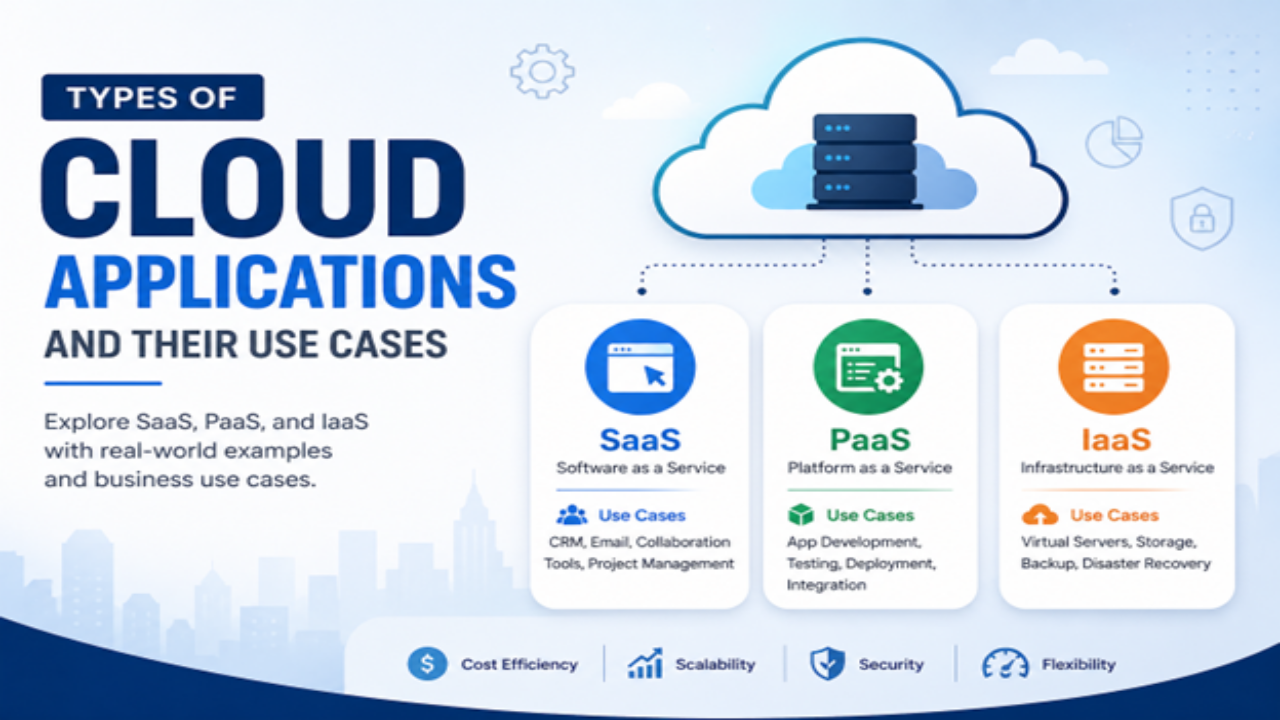
Cloud computing isn’t a foreign term in technology anymore. It’s actually becoming the foundation of how modern businesses operate and grow. This includes the apps you open in your browser to the systems running entire enterprises. The point is, cloud apps are everywhere. You might not always notice them, but you’re definitely using them. And you might be using them multiple times a day.
Cloud computing is about accessing software and computing power over the internet. It is specifically used for storage. Cloud technology makes it more flexible instead of relying on local machines or physical servers.
This shift has changed how businesses think about technology. Instead of heavy investments and constant maintenance, companies can now move faster and focus on growth rather than infrastructure.
What’s interesting is how quickly cloud apps have been adopted across industries. Startups use them to launch faster, enterprises use them to scale globally, and industries like healthcare and education rely on them to stay secure. To understand why cloud technology matters so much today, it helps to break down the different types of cloud applications and how they’re actually used in real life.
Software as a Service (SaaS)
Software as a Service, or SaaS, is probably the most familiar form of cloud application. These are applications delivered directly over the internet, usually through a web browser. There’s nothing to download, nothing to install, and no complex setup involved. You log in, and you’re good to go.
The beauty of SaaS is that users don’t even have to worry about the software’s updates, security patches, or system maintenance. All of that happens on the provider’s end. This makes SaaS especially appealing for businesses that want reliable software without the headache of managing it internally.
Use Cases
In terms of use cases, SaaS apps show up everywhere.
Customer relationship management tools help sales and support teams track leads and manage customer interactions.
Email and collaboration platforms allow teams to communicate and work together from anywhere in the world.
Accounting and finance software helps businesses handle payroll and financial reporting without needing in-house accounting systems.
The Advantages
The benefits are straightforward but powerful. SaaS apps are easy to access from any device with an internet connection.
Pricing is usually subscription-based, which makes costs predictable and easier to manage.
Automatic updates mean users always have access to the latest features without lifting a finger.
For many businesses, SaaS is the simplest and most cost-effective way to use cloud technology.
Platform as a Service (PaaS)
Platform as a Service is here to take things a step further. Instead of delivering ready-made software, PaaS provides a cloud-based platform. Here, developers can build and deploy their own apps. The key idea here is abstraction. Developers don’t have to worry about servers, operating systems, or hardware. They can focus purely on writing code and building features.
Use Cases
PaaS is widely used for web and mobile app development. It is especially useful because it speeds up the entire development process.
Teams can quickly create apps while experimenting with new ideas. The PaaS infrastructure also makes it simple to release updates without dealing with limitations.
API development and management is another common use case, especially for businesses building interconnected systems.
DevOps teams also rely on PaaS for continuous integration and continuous deployment pipelines, allowing faster and more reliable releases.
The Advantages
The biggest advantage of PaaS is efficiency. Development cycles become shorter while operational complexity is reduced, and scalability is built into the platform.
As demand grows, apps can scale without developers needing to rework their infrastructure.
This is where many businesses start looking into professional Cloud App Development Services to fully use PaaS platforms while ensuring performance and long-term scalability are handled the right way.
Infrastructure as a Service (IaaS)
Infrastructure as a Service is basically the most flexible and technical form of cloud apps. With IaaS, businesses rent virtualized computing resources. This can include servers, storage, and networking components over the cloud. Instead of owning physical hardware, companies can create and manage their infrastructure digitally.
Use Cases
IaaS is commonly used for hosting websites and apps, especially those with unpredictable traffic.
It’s also a popular choice for disaster recovery and backup solutions because data and systems can be replicated across regions.
High-performing computing tasks, like data analysis and simulations, also benefit from IaaS due to its ability to scale resources on demand.
The Advantages
What makes IaaS attractive to potential businesses is control. Businesses have full authority over their operating systems, apps, and configurations.
The pay-as-you-go pricing model ensures companies only pay for what they use, which helps optimize costs.
Scalability is another major benefit, allowing organizations to expand or shrink their infrastructure as needed without long-term commitments.
Serverless Cloud Applications
Serverless computing might sound confusing at first because servers still exist in the background. The difference is that developers don’t have to manage them at all. In serverless cloud apps, code runs in response to specific events, such as a user action or data update, and the cloud provider handles everything else.
Use Cases
This approach is ideal for event-driven apps where tasks need to run automatically.
Microservices architectures often rely on serverless functions to handle specific processes independently.
Real-time data processing, such as handling streaming data or responding to user activity, is another strong use case.
The Advantages
Serverless apps reduce operational overhead significantly. There’s no capacity planning and no idle resources.
The costs are connected directly to execution time, which makes this model highly affordable for certain workloads.
Automatic scaling ensures that apps perform smoothly even during traffic spikes.
Conclusion
Cloud apps come in many forms, and each serves a distinct purpose. There are SaaS tools that simplify daily operations and PaaS platforms that accelerate development. We have IaaS solutions that offer full control and serverless architectures that reduce issues.
So whatever your goal, the cloud ecosystem is vast and full of options. And it is there to help you in your digital journey for storage and growth.
Choosing the right cloud application model depends on business goals, technical requirements, and long-term growth plans.
