

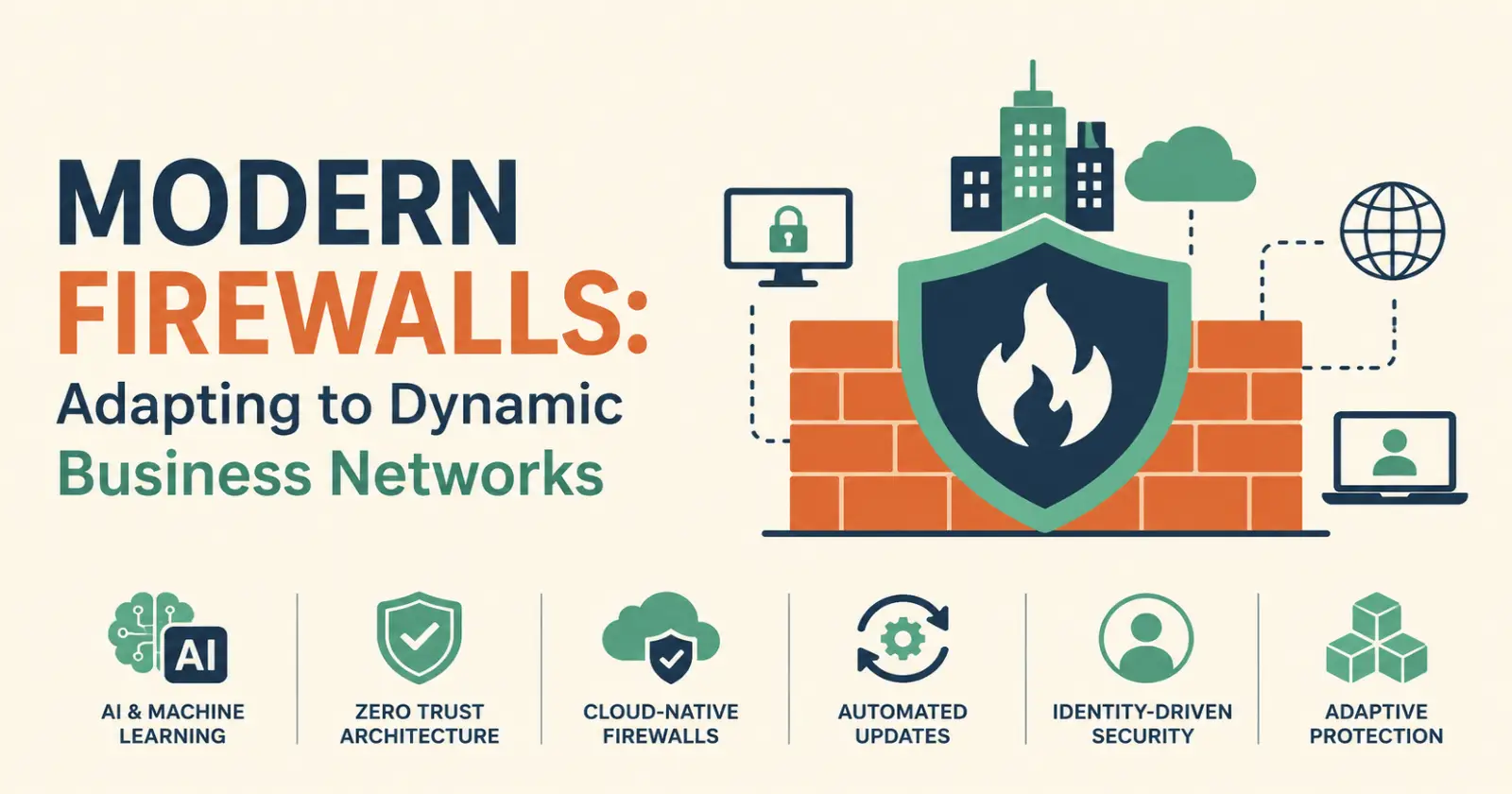
In today’s rapidly evolving digital landscape, businesses are continually transforming their network infrastructures to meet new demands. This evolution necessitates advanced security measures to protect sensitive data and maintain operational integrity. Modern firewalls have risen to this challenge, adapting to dynamic business networks through innovative technologies and strategies.
One such solution is the enterprise next generation firewall platform offered by Versa Networks. Versa Networks is a recognized leader in AI/ML-powered Unified Secure Access Service Edge (SASE) solutions, providing comprehensive security in a single, scalable platform. Their next-generation firewall (NGFW) delivers advanced application-layer capabilities to protect against the most evasive known and unknown threats across entire networks, integrating networking, security, threat prevention, and centralized management.
AI and Machine Learning Integration
Modern firewalls leverage artificial intelligence (AI) and machine learning to enhance threat detection and prevention. By analyzing network traffic patterns, these technologies can identify anomalies and potential threats in real time, enabling swift responses to emerging cyber threats. For instance, AI-driven dynamic firewall optimization using reinforcement learning has shown significant improvements in detection accuracy and response times.
This evolution allows organizations not only to recognize known attack signatures but also to identify zero-day vulnerabilities and new attack methods. By analyzing massive volumes of data across hybrid environments, machine-learning-powered firewalls become more effective over time as their algorithms are continuously refined with new threat intelligence feeds. The move towards self-learning models also reduces false positives, allowing IT teams to focus on meaningful threats rather than being overwhelmed by noise. In addition, AI-enabled firewalls increasingly leverage behavioral analytics to form baselines of normal activity and quickly flag anomalies indicative of insider threats or compromised credentials.
Zero Trust Architecture
Adopting a Zero Trust approach means that no entity, whether inside or outside the network, is trusted by default. Modern firewalls integrate with Zero Trust architectures to enforce strict access controls and continuously verify the identity and trustworthiness of users and devices. This strategy minimizes the risk of unauthorized access and lateral movement within the network.
Zero Trust frameworks are particularly effective in decentralized, remote, or hybrid work environments, where users connect from a variety of locations and networks. Integration with existing identity and access management systems enables real-time risk assessment before permitting connectivity. Firewalls that implement Zero Trust principles often include features such as multi-factor authentication (MFA), robust logging and monitoring, and policy enforcement engines that make fine-grained access decisions based on user role, device posture, and current threat intelligence. With the proliferation of IoT devices, Zero Trust ensures even non-human actors are continuously scrutinized for malicious behaviors.
Cloud-Native Firewalls
As businesses migrate to cloud environments, traditional firewalls may struggle to keep up with the scalability and flexibility required. Cloud-native firewalls are designed to operate seamlessly within cloud infrastructures, providing consistent security policies across on-premises and cloud resources. These firewalls can dynamically scale to meet fluctuating workload demands, ensuring robust protection without compromising performance.
Cloud-native firewalls are architected to accommodate the elastic nature of cloud resources, which can expand or contract rapidly in response to demand. They are also compatible with containerized applications, serverless computing, and multi-cloud strategies, making them ideal for supporting DevOps workflows and agile business operations. Most importantly, cloud-native solutions provide centralized visibility across disparate resources and often integrate with cloud provider security services, network access controllers, and automated incident response platforms. This results in a unified, holistic security approach regardless of where assets reside.
Automated Updates and Patching
Keeping firewalls up to date is crucial to defending against the latest threats. Modern firewalls often include automated update mechanisms that ensure the latest security patches and threat intelligence are applied promptly. This automation reduces the window of vulnerability and lessens the administrative burden on IT teams. For example, some solutions have introduced SASE-native LAN next-generation firewalls that aim to eliminate the need for manual patching.
Automated updates ensure protection against fast-moving exploits and newly discovered vulnerabilities before attackers can exploit them. Moreover, continuous updates enable firewalls to rapidly adapt to new regulations, industry standards, and compliance requirements (such as GDPR or HIPAA), keeping organizations aligned with best security practices at all times. This proactive maintenance not only enhances security but frees up skilled security professionals to focus on higher-value tasks, such as strategic planning and threat hunting.
Identity-Driven Firewalls
Traditional firewalls rely on IP addresses and ports to control access, which can be insufficient in dynamic environments. Identity-driven firewalls use user and device identities to enforce policies, enabling more granular, context-aware security measures. This approach ensures that access controls are aligned with the organization’s security policies and adapt to changes in user roles and device statuses.
Identity-driven firewalls go beyond static rules by leveraging integration with directory services such as LDAP, Active Directory, or cloud-based identity providers. They can automatically assign or revoke privileges based on contextual factors such as the user’s location, device health, and recent behavioral anomalies, ensuring that only the right people have access to sensitive resources. This methodology is especially valuable in dynamic workplaces or for organizations with contractors, partners, or BYOD (bring-your-own-device) policies. When users leave the company or change roles, firewalls immediately adjust permissions without manual intervention, reducing the risk of insider threats.
Containerization for Flexibility
To keep pace with rapidly evolving threats, some firewalls utilize containerization and microservices architectures. This design allows for modular updates and rapid deployment of new security features without disrupting existing operations. Containerized firewalls can be easily integrated into various environments, providing flexibility and resilience against emerging cyber threats.
This architectural approach enables security teams to patch, scale, or deploy new features at the container level, greatly improving agility. For businesses leveraging DevOps and CI/CD pipelines, containerized firewalls fit seamlessly into development cycles, supporting faster innovation with reduced downtime. Moreover, microservices-based firewalls facilitate horizontal scaling, allowing organizations to handle massive surges in network traffic during peak times, such as ecommerce events or large-scale product launches, without a drop in protection or efficiency.
Adaptive Cybersecurity Measures
Adaptive cybersecurity involves continuously monitoring and adjusting security measures to respond to new threats. Modern firewalls employ adaptive strategies, such as dynamically retrainable models, to enhance real-time network protection. This proactive approach ensures that security measures evolve alongside the threat landscape, maintaining robust defense mechanisms.
By leveraging continuous feedback loops, adaptive firewalls identify shifts in attack patterns and adjust policies accordingly. The ability to quickly contain and mitigate threats minimizes the impact of zero-day attacks and reduces the potential for lateral movement within networks. With adaptive measures, organizations create resilient environments that can automatically respond to new attack vectors, freeing up security teams to focus on complex investigations and long-term strategic initiatives. Additionally, these firewalls often integrate with broader XDR (Extended Detection and Response) platforms, further enhancing visibility and response capabilities across the organizational security stack.
Conclusion
As business networks become more dynamic and complex, modern firewalls have evolved to meet these challenges. By integrating AI, embracing Zero Trust principles, adopting cloud-native architectures, and implementing adaptive security measures, these firewalls provide robust protection tailored to the needs of contemporary enterprises. Staying informed about these advancements is crucial for organizations aiming to safeguard their digital assets in an ever-changing threat landscape.
In summary, the evolution of firewall technology not only meets but often anticipates the needs of organizations in the digital age. By incorporating identity-driven controls, automated updates, flexible containerized deployment, and cutting-edge adaptive security features, businesses can achieve a security posture that is both resilient and future-proof. In a world where cyber risks continue to multiply, these forward-thinking approaches ensure organizations maintain operational continuity and protect mission-critical assets from even the most sophisticated attack campaigns. Investment in modern firewall solutions is an investment in ongoing business success and trustworthiness in the eyes of customers, partners, and stakeholders.
