

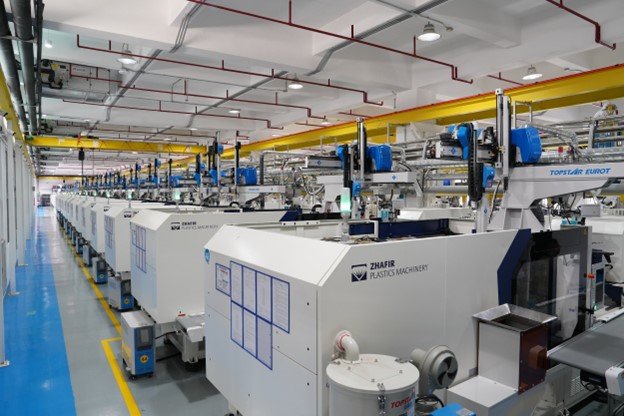
Plastic components form the backbone of modern medical devices, from surgical instruments and drug delivery systems to implantable technologies and diagnostic equipment. As healthcare demands grow increasingly complex, medical device manufacturers face mounting pressure to deliver components that meet exacting standards for precision, biocompatibility, and regulatory compliance—all while managing costs and accelerating time to market. The challenge intensifies as devices become smaller, more intricate, and more personalized to patient needs.
Injection molding has long served as the manufacturing method of choice for producing reliable medical-grade plastic parts at scale. However, the landscape is shifting rapidly. New technologies, materials, and process innovations are transforming what’s possible in medical component production. This article explores the most significant advanced injection molding trends reshaping medical device manufacturing today, from micro-molding breakthroughs and smart mold technologies to evolving compliance strategies. Whether you’re developing next-generation implants or scaling production of diagnostic consumables, understanding these trends is essential for maintaining competitive advantage and delivering safer, higher-performing medical devices.
The Critical Role of Injection Molding in Medical Device Production
Injection molding established itself as the dominant manufacturing process for medical plastic components because it delivers the rare combination of precision, repeatability, and cost efficiency that healthcare applications demand. From the earliest mass-produced syringes to today’s complex multi-component assemblies, the technology has evolved alongside the medical industry’s growing expectations. Early applications focused primarily on simple, high-volume disposables, but the scope has expanded dramatically to encompass structural housings for imaging equipment, fluid management systems, and intricate components for minimally invasive surgical tools.
Today’s medical device market requires manufacturers to scale production rapidly without sacrificing the dimensional accuracy or material integrity that patient safety demands. Devices must function reliably across millions of units while meeting increasingly stringent biocompatibility and sterilization requirements. Traditional injection molding processes, while proven, cannot always address the tighter tolerances, novel material demands, and accelerated development timelines that define current projects. This gap between established capabilities and emerging requirements is precisely why advanced injection molding trends have become essential rather than optional. Manufacturers who embrace these innovations position themselves to meet modern medical standards while maintaining the production economics that make healthcare technologies accessible at scale.
Top Trends in Precision Engineering for Medical Components
The pursuit of precision in medical device manufacturing has entered a new era, driven by patient demands for less invasive procedures, more accurate diagnostics, and longer-lasting implants. Precision engineering now extends beyond simple dimensional accuracy to encompass surface finish quality, material consistency at the molecular level, and the ability to reproduce complex geometries across millions of production cycles without deviation. For medical device components, even micron-level variations can compromise device function or patient safety, making advanced precision capabilities a non-negotiable requirement rather than a competitive differentiator.
Several converging forces are pushing injection molding toward unprecedented levels of accuracy. Digital simulation tools now predict material flow behavior with remarkable fidelity, allowing engineers to optimize gate locations, cooling channels, and packing pressures before cutting steel. Multi-cavity molds equipped with individual cavity pressure sensors ensure that every part in a production run meets specification, eliminating the statistical variation that once plagued high-volume medical manufacturing. These capabilities directly address what medical device companies need most: high-quality, precision-engineered parts delivered consistently at production scale.
Micro-Molding and Miniaturization
The medical industry’s push toward minimally invasive surgery, implantable electronics, and point-of-care diagnostics has created explosive demand for components measured in fractions of a millimeter. Micro-molding addresses this need by producing parts weighing as little as a few milligrams with tolerances measured in single-digit microns. Applications include micro-fluidic channels for lab-on-a-chip diagnostics, tiny catheter tips with complex internal geometries, and cochlear implant housings that must integrate seamlessly with human tissue. The process requires specialized machinery with precise shot control, often delivering material volumes below one cubic centimeter, paired with tooling manufactured using ultra-precision machining or even laser ablation techniques. What makes micro-molding particularly challenging is that conventional molding rules don’t always apply at this scale—material viscosity behavior changes, cooling dynamics shift, and part ejection requires entirely rethought approaches to avoid damaging fragile features.
Advanced Materials for Biocompatibility
Material innovation is expanding what injection-molded medical components can achieve in the human body and clinical environments. Bio-resorbable polymers such as polylactic acid (PLA) and polyglycolic acid (PGA) now enable implants—including bone screws, stents, and drug delivery matrices—that perform their function and then safely dissolve, eliminating the need for removal surgery. Antimicrobial polymers incorporating silver ion technology or surface-active agents reduce hospital-acquired infection risks in devices like catheters and surgical instrument handles. High-performance polymers such as PEEK offer radiolucency for imaging compatibility alongside the mechanical strength needed for spinal fusion cages and orthopedic implants. Each of these material advances demands corresponding injection molding process adaptations, from modified barrel temperatures that prevent degradation of sensitive bio-resorbable compounds to specialized screw designs that maintain the uniform dispersion of antimicrobial additives throughout the melt. The result is a materials toolkit that meets strict ISO 10993 biocompatibility standards while enabling device performance that was simply unachievable a decade ago.
Innovations in Mold Manufacturing and Custom Plastic Solutions
The mold itself—once viewed as a static tool built to a fixed specification—has become a dynamic, intelligent system at the center of medical device innovation. Advances in mold manufacturing now enable medical device companies to achieve levels of customization and production flexibility that rigid traditional tooling could never support. Conformal cooling channels, produced through metal additive manufacturing, follow the exact contour of part geometries rather than relying on straight-line drilled passages. This approach reduces cycle times by up to 40 percent in some medical applications while eliminating hot spots that cause warpage in thin-walled components like diagnostic cartridge housings. Meanwhile, modular mold architectures allow manufacturers to swap cavity inserts without rebuilding entire tool bases, making it economically viable to produce family molds that deliver multiple related components—such as all parts of an inhaler assembly—in a single production cycle. Molding manufacturers like WEILAN MFG have invested in these custom plastic solutions to give medical device companies the agility to respond to design changes late in development without absorbing prohibitive retooling costs.
Smart Molds and IoT Integration
Embedding sensors directly within mold cavities represents one of the most transformative shifts in mold manufacturing for medical applications. Cavity pressure sensors, temperature probes, and accelerometers now feed real-time data to centralized analytics platforms during every injection cycle. This instrumentation enables automatic rejection of suspect parts before they ever reach quality inspection, catching fill imbalances or material viscosity shifts within milliseconds. Predictive maintenance algorithms analyze trends in mold performance data—detecting gradual wear on shut-off surfaces or progressive buildup in venting channels—and trigger maintenance interventions before defects occur. For medical manufacturers operating under ISO 13485 quality management systems, this IoT integration provides continuous process verification documentation automatically, replacing periodic manual checks with comprehensive digital records that satisfy auditor requirements and strengthen traceability from raw material to finished device.
Rapid Prototyping and Customization
The traditional timeline from design concept to production-representative molded parts—often stretching twelve to sixteen weeks for hardened steel tooling—conflicts with the accelerated development cycles medical device companies now face. Rapid tooling approaches bridge this gap effectively. 3D-printed mold inserts using high-temperature photopolymers or metal powder bed fusion can deliver functional prototype molds within days, producing hundreds of parts in production-intent materials for design verification testing and early-stage biocompatibility evaluation. Aluminum soft tooling extends this further, supporting pilot runs of thousands of units for clinical trials while engineers finalize design details in parallel. These techniques prove especially valuable for patient-specific devices, such as custom surgical guides or anatomically matched implant trials, where each geometry is unique and traditional tooling economics would be impossible. The ability to iterate rapidly through physical prototypes rather than relying solely on simulation compresses development timelines and reduces the costly late-stage design changes that have historically plagued medical device programs.
Ensuring Compliance with Medical Manufacturing Standards
Regulatory compliance in medical device manufacturing isn’t a final checkpoint—it’s an integrated discipline that must be embedded into every stage of the injection molding process, from material selection and mold qualification through production validation and post-market surveillance. The regulatory landscape governing medical plastic components continues to intensify, with frameworks like ISO 13485 for quality management systems, FDA 21 CFR Part 820 for design controls, and EU MDR requirements creating overlapping obligations that manufacturers must satisfy simultaneously. Advanced injection molding processes address these demands by building compliance into the production architecture itself rather than treating it as a downstream verification activity. Process validation protocols—including Installation Qualification, Operational Qualification, and Performance Qualification—establish documented evidence that molding systems consistently produce components within defined specifications. Digital process monitoring generates the continuous data streams that regulators increasingly expect, moving beyond periodic sampling toward comprehensive production records that demonstrate control across every cycle.
Regulatory Frameworks and Quality Control
Cleanroom manufacturing environments, typically ISO Class 7 or Class 8 for medical molding operations, prevent particulate and microbial contamination that could compromise device safety. These controlled environments integrate directly with molding cells, allowing parts to be produced, inspected, and packaged without exposure to uncontrolled conditions. Material traceability systems track resin lots from supplier certification through finished component, creating an unbroken chain of documentation that enables rapid response to any quality concern. Statistical process control monitors critical dimensions and material properties in real time, flagging drift before it produces nonconforming product. For manufacturers pursuing FDA clearance or CE marking, this infrastructure provides the objective evidence that design outputs meet design inputs—a fundamental requirement that auditors scrutinize closely. Companies that invest in these quality systems early find that compliance becomes a natural outcome of their manufacturing process rather than a burdensome overlay, reducing both audit findings and the costly remediation efforts that follow them.
Practical Steps to Adopt Advanced Injection Molding Trends
Medical device companies looking to integrate these advanced injection molding capabilities into their operations need a structured approach that balances innovation with risk management. Start by conducting a gap analysis of your current molding capabilities against your product roadmap—identify where existing processes fall short on tolerance requirements, material performance, or cycle time targets for upcoming device programs. This assessment reveals which trends deliver the highest immediate value for your specific portfolio.
Next, prioritize technology investments based on regulatory impact. Implementing real-time process monitoring and digital documentation systems often yields the fastest return because these capabilities simultaneously improve part quality and streamline compliance evidence generation. When evaluating manufacturing partners, assess their cleanroom classification, material traceability infrastructure, and experience with your target regulatory pathway—whether FDA 510(k), PMA, or EU MDR Class III. Request evidence of successful process validations for comparable device components rather than relying on general capability claims. Begin new technology adoption with pilot programs on lower-risk components, using rapid prototyping tools to validate performance before committing to production tooling investments. Finally, establish cross-functional teams that include quality, regulatory, and manufacturing engineering from project inception, ensuring that compliance requirements inform mold design decisions rather than constraining them after the fact. This integrated approach transforms advanced injection molding trends from aspirational concepts into operational advantages that deliver measurable improvements in device quality, development speed, and manufacturing economics.
The Future of Injection Molding in Medical Device Innovation
The advanced injection molding trends reshaping medical device manufacturing represent more than incremental improvements—they constitute a fundamental shift in how medical-grade plastic components are designed, produced, and validated. Micro-molding and miniaturization are enabling the next generation of minimally invasive devices and implantable technologies. Advanced biocompatible materials are expanding therapeutic possibilities while meeting rigorous safety standards. Smart mold technologies and IoT integration are transforming quality control from reactive inspection to proactive process assurance, while rapid prototyping approaches are compressing development timelines that once stretched across months into weeks.
Equally important, these manufacturing innovations are converging with compliance strategies that embed regulatory adherence directly into production systems rather than treating it as a separate burden. For medical device companies navigating this landscape, the path forward requires deliberate investment in capabilities that align with their specific product roadmaps and regulatory pathways. Those who successfully integrate precision engineering, intelligent mold manufacturing, and robust quality infrastructure will be best positioned to deliver safer, more effective devices to patients while maintaining the production economics that healthcare accessibility demands. As medical technology continues advancing toward greater personalization and complexity, injection molding will remain central to translating clinical innovation into manufactured reality.
